Developing integrative approaches for macroalgal indoor cultivation
Dr. Anna Fricke, Scientist, food4future (F4F) and SolKubiM c/o Leibniz Institute of Vegetable and Ornamental Crops (IGZ), Germany

Speaker
Seagriculture EU
16 - 18 June 2026
Gothenburg, Sweden
Developing integrative approaches for macroalgal indoor cultivation
Dr. Anna Fricke, Scientist, food4future (F4F) and SolKubiM c/o Leibniz Institute of Vegetable and Ornamental Crops (IGZ), Germany
About the speaker:
ORCID 0000-0003-1188-0114
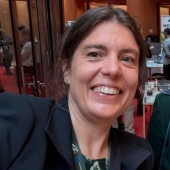
Dr. Anna Fricke acquired her diploma together with the Alfred Wegner Institute (AWI) and received her PhD together with the Leibniz Center for Tropical Marine Research (ZMT) from the University of Bremen. She has about 20 years’ experience in the field of macroalgal research and worked in cooperation with institutes and companies from different countries (e.g., Argentina, France, Norway, Senegal, Curacao, Vietnam) and published over 45 articles on this topic. Since 2019 she is working at the Leibniz Institute of Vegetable and Ornamental crops (IGZ) within the Federal Ministry of Research, Technology and Space (BMBFTR) funded project food4future, addressing the potentials of alternative food sources, working as lecturer in different universities and supporting with her expertise different committees (e.g., Eklipse, AG Stoffliste of the Federal Office of Consumer Protection and safety). In 2024 she initiated the research project SolKubiM, funded by the Federal Ministry of Agriculture, Food and Regional Identity (BMLEH), as a spin off from food4future and started to build up her team to work on the challenges on urban macroalgal cultivation.
Company info:
The joint project food4future (f4f), one of the six consortia within the BMFTR programme “Agricultural Systems of the Future” (ASF) explores radical innovations in the field of saline indoor cultivation of alternative food sources to ensure sustainable and healthy food systems.
https://www.food4future.de/en/home
The project Brine-based systems for inland macro and microalgae cultivation (SolKubiM) funded by the Federal Ministry of Agriculture, Food and Regional Identity, managed by the Federal office for Agriculture and Food, is aiming to make inland production of marine algae sustainable by the direct coupling of algal cultivation with a thermal spa system.
https://www.saarowtherme.de/forschung
The Leibniz Institute of Vegetable and Ornamental Crops (IGZ) is a research institute of the Leibniz Association and contributes to solving current global challenges with scientifically sound findings from basic and applied research in horticulture. These include the preservation of biodiversity, the fight against climate change, and the still widespread problem of malnutrition. The institute is jointly funded by the Ministry of Science, Research, and Culture of the State of Brandenburg (MWFK) and the Federal Ministry of Agriculture, Food, and Regional Identity (BMLEH). The IGZ is based in Großbeeren in Germany.
Presentation:
Current estimates predict that more than 9.3 billion people will live on earth by 2050, and that most of them will live in or near cities. This makes it increasingly difficult to meet the rising demand of healthy food and requires the development of new approaches to strengthen and adapt the agrifood system. In this respect, controlled environment agriculture (CEA) rapidly evolved over the past years, driven by the fast development lowering energy costs and allowing scalable solutions. Aiming to overcome environmental pollution, stabilize growing conditions and shorten transportation ways, both agri- as well as aquaculture profit from the CEA approach. To make an inland production of marine macroalgae sustainable and industrially usable, different aspects need to be considered, such as the integration of suitable cultivation units into the growing urban environment. In this respect the food4future consortia (https://www.food4future.de/en/home) develops new indoor production systems for saltwater-based organisms as alternative food sources and fosters the exchange with different stakeholders, to increase the acceptance and awareness of these new foods. One of the critical factors for marine organism cultivations in inland areas is the availability of an adequate cultivation medium. With her group, Anna Fricke tested regional brine sources and discovered that these represent adequate algal cultivation media. This allows now the production of salt-water based macroalgae independent from the ocean. In the SolKubiM project (https://www.saarowtherme.de/forschung) algae cultivation systems will be integrated into the brine cycle of a thermal spa system to foster the multiple use of this valuable water resource. Accompanied by an engaged outreach strategy to connect to society the projects aim to increase the public awareness and transform the current perception of algal cultivation by creating new context and settings.