Modernizing Kelp Aquaculture Through Selective Breeding
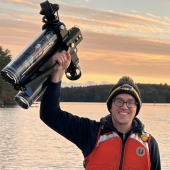
Gary Molano, Chief Executive Officer, MacroBreed LLC, USA

Speaker
Seagriculture EU
16 - 18 June 2026
Gothenburg, Sweden
Modernizing Kelp Aquaculture Through Selective Breeding
Gary Molano, Chief Executive Officer, MacroBreed LLC, USA
About the speaker:
Gary Molano is passionate about leveraging science to positively impact the world. With a PhD from University of Southern California, he specializes in seaweed genomics and bioinformatics. He developed foundational tools for kelp breeding, including annotated reference genomes for giant and sugar kelp. Along with academic colleagues, he co-founded MacroBreed to commercialize unique genomic breeding advancements stemming from the MARINER Program (ARPAe, USA, DOE). Gary was recently awarded an Activate Fellowship and is currently based in New York City.
Company info:

MacroBreed is modernizing seaweed aquaculture by leveraging genomic prediction and AI to increase the yield, stress tolerance and value of farmed seaweed through selective breeding. Working with companies in Europe, North America and Asia, they aim to integrate traits that are tailored for regional markets with non-reproductive traits that protect local ecosystems. Building on 7-years of R&D experience and >$7M of investment in the Northeastern US, MacroBreed plans to commercialize broadly applicable genomic breeding principles to improve seaweed farming globally.
Presentation:
Improving farmed kelp quality and availability is critical to being cost-competitive with imports and wild harvests, and to expand markets. Enhancing the value of farmed kelp is a key for the industry to scale. Like the advancements in selective breeding programs that produced > 250% improvement in corn yields and sugar density over the last century, our research has demonstrated similar improvements in kelp yields in just 7 years. Modern genomic tools are responsible for such speedy progress, including an annotated reference genome, a genetically diverse and DNA sequenced gametophyte seedbank, and multiple years of farmed crosses and their associated phenotypes (> 30 traits). In addition to higher yield, MacroBreed LLC is focused on key traits such as higher temperature tolerance, higher bio-active compounds, and lower anti-nutritionals (iodine and heavy metals). A major advantage and option of the MacroBreed breeding program is integration of a non-reproductive trait, a genetics-guided crossing scheme (non-GMO) to produce kelp that are unable to reproduce and thus potentially impact wild kelp ecosystems. MacroBreed aims to develop regional breeding programs and combine improved traits to enhance the value of farmed kelp. We will present results from our sugar kelp (Saccharina latissima) breeding programs and our non-reproductive kelp trials in the US. We will show how breeding can lower costs per unit, help reach new markets, and expand the industry.
______________________________________________
Gary Molano1,2; Sergey Nuzhdin2; Charles Yarish1,4,6; Filipe Alberto1,5; Kelly DeWeese2; Yaoguang Li4,7; Scott Lindell1,3