Seaweed for Climate: Separating Real Mitigation from Wishful Thinking.
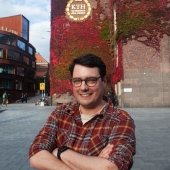
Jean-Baptiste Thomas, Researcher, KTH Royal Institute of Technology, Sweden

Speaker
Seagriculture EU
16 - 18 June 2026
Gothenburg, Sweden
Seaweed for Climate: Separating Real Mitigation from Wishful Thinking.
Jean-Baptiste Thomas, Researcher, KTH Royal Institute of Technology, Sweden
About the speaker:
Trained in Industrial Ecology, Jean-Baptiste explores how the sea can feed and support society without undermining the ecosystems we depend on. His work uses life cycle assessment and environmental systems analysis to follow carbon, energy, and nutrient flows through seaweed farms, low-trophic aquaculture, and other blue value chains. A lot of this centres on the emerging Swedish and European (farmed) seaweed sector, but also on wild and cultivated marine biomass, beach-cast, reed, and marine restoration efforts that can help close loops between land and sea. He works closely with industry and public actors across Europe to co-develop blue food, blue materials, multi-use at sea, and blue carbon solutions. He is based at SEED, KTH, and helps coordinate KTH’s efforts on Sustainable Food Production and marine research through KTH Food and the KTH Water Centre.
Company info:

KTH Royal Institute of Technology in Stockholm is Sweden’s largest technical university and a leading international hub for engineering, architecture, and sustainability-focused research. Since 1827, KTH has educated engineers and researchers who tackle global challenges in climate, energy, food, water, and urban development. With five schools, strong industry partnerships, and a clear focus on sustainable societal development, KTH combines cutting-edge research with challenge-driven education to prepare students to shape a more sustainable, equitable future.
Presentation:
In this talk the speaker examines the climate potential of a range of seaweed value chains using a holistic carbon accounting framework. Drawing on recent literature and work with colleagues, he compares cases such as Caribbean sargassum use, Baltic beach-cast, European and Chinese seaweed cultivation, carbon farming, and kelp forest restoration. By tracing the full carbon story for each, the talk helps distinguish genuinely robust climate solutions from overhyped ones, and points to where seaweed’s many other benefits should take centre stage instead.